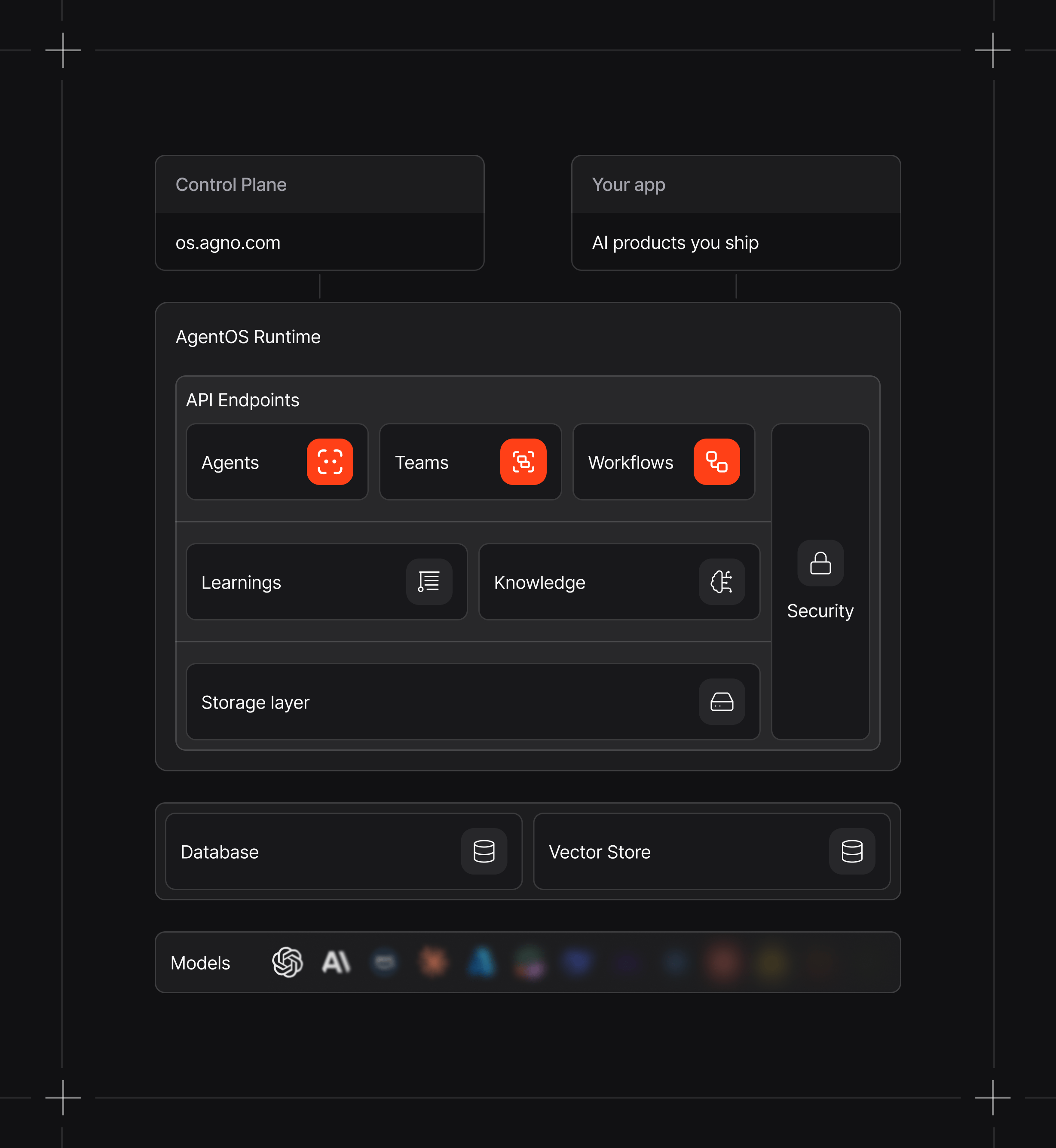
AgentOS is a FastAPI-powered runtime for serving multi-agent systems. The smallest AgentOS looks like this:
agno_assist.py
This registers one agent, stores its sessions in a local SQLite database, and returns a FastAPI app that you can run locally or deploy to your cloud provider. Engineering teams use AgentOS to serve agents, teams, and workflows through one backend. It provides REST endpoints for runs, sessions, memory, knowledge, evaluations, approvals, and schedules. Add MCP, messaging interfaces, tracing, and JWT authorization as your deployment needs them. Build components with the Agno SDK or supported adapters for the Claude Agent SDK, LangGraph, DSPy, and Antigravity. Register them with AgentOS to power product features, automations, and internal tools.

What AgentOS Provides

Architecture

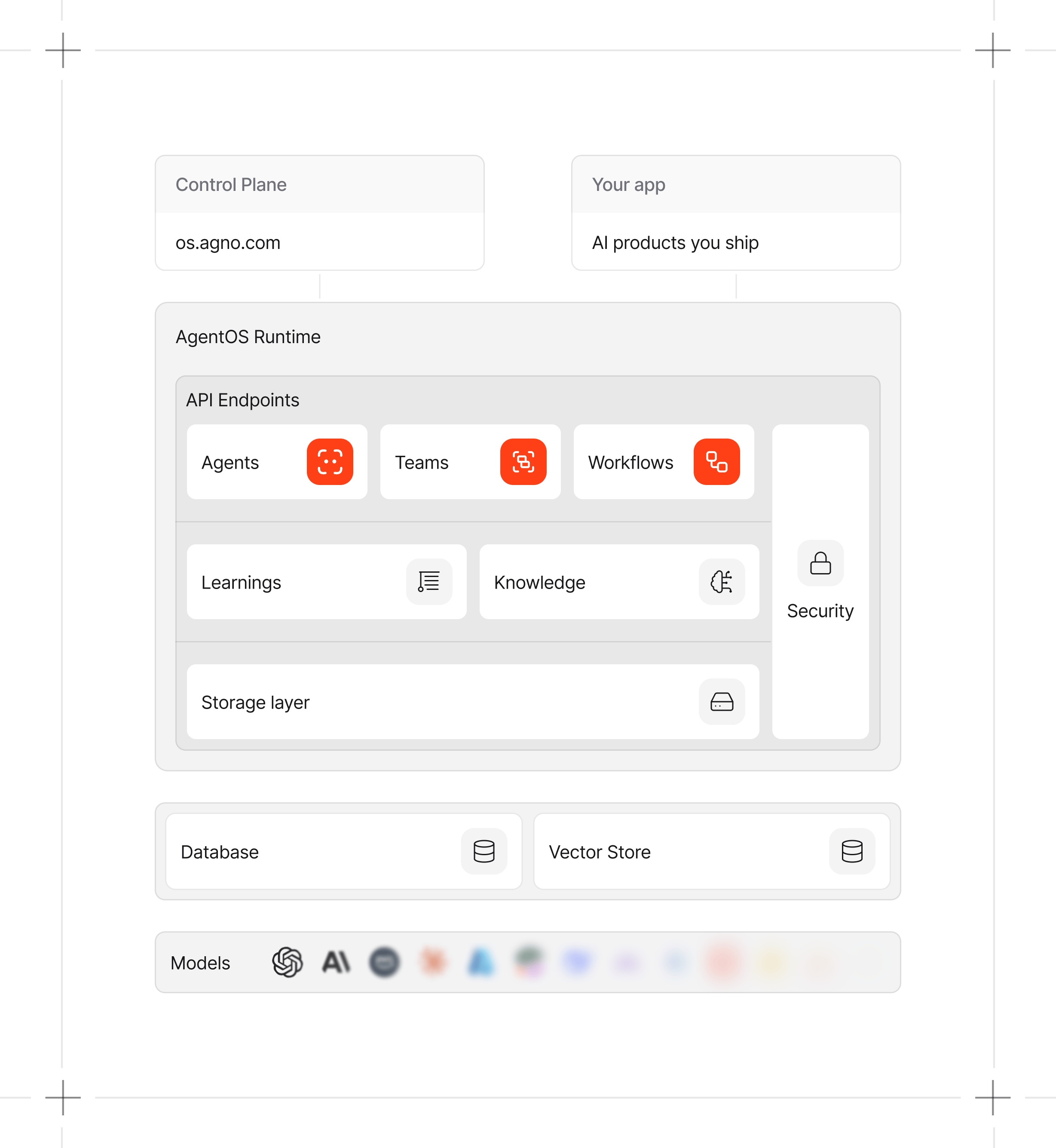
AgentOS has two parts: The runtime exposes the same APIs to your product and the AgentOS Control Plane. Products and the AgentOS Control Plane connecting to an AgentOS runtime
Where Data Flows

Your AgentOS runtime and configured databases run in infrastructure you control. The Control Plane sends requests directly from your browser to the selected runtime. See Telemetry for the collected fields and configuration options. See Security & Auth for runtime authentication and authorization.

Next Steps

Run AgentOS Locally

Serve one agent and store its sessions in SQLite.

Connect the Control Plane

Connect a local or deployed runtime to the web interface.

Use the Control Plane

Run components, inspect execution, and operate the connected runtime.

Security & Auth

Protect endpoints with a security key, JWTs, and scoped permissions.

Developer Resources